
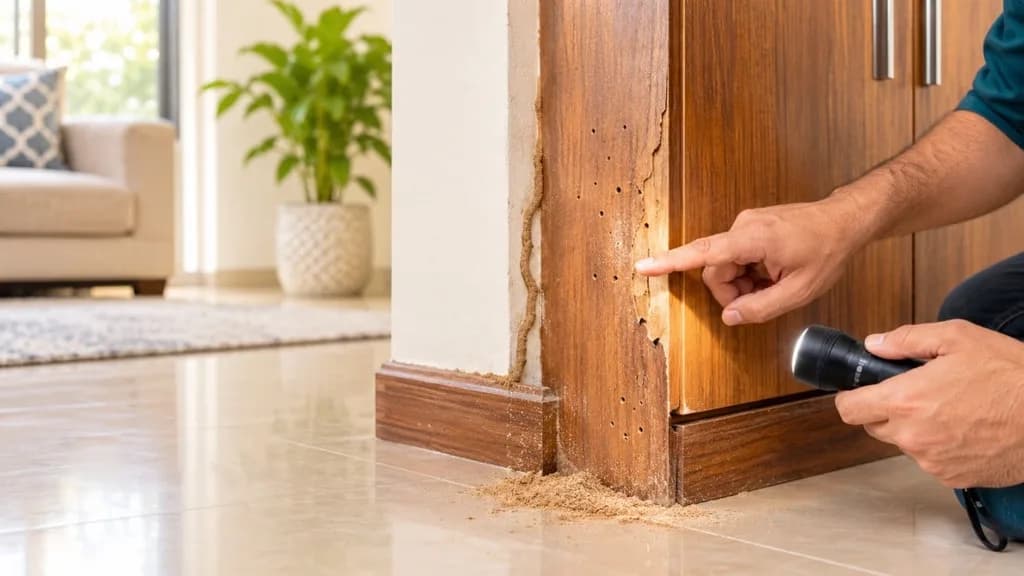
Termites rarely announce themselves. They feed inside wood and behind plaster, out of sight, and the first thing most homeowners notice is a wardrobe door that suddenly sticks or a patch of paint that starts to bubble. By then, the colony may have been active for months. In the UAE, where warm and humid conditions suit termites for much of the year, that damage can spread quickly.
The good news is that termites do leave clues. Once you know what to look for, you can spot a problem early, confirm it with a few simple checks and act before small repairs turn into expensive ones. This guide walks you through exactly that.
Why Termite Damage Is Easy to Miss
Termites eat wood from the inside, so the outer surface often looks perfectly fine while the inside is almost empty. Subterranean termites also travel through soil and build covered mud tunnels to reach wood without being exposed to air, while drywood termites live entirely inside the timber they eat. Either way, the pests themselves are hard to see. What you can see is the damage and the traces they leave behind, which is why a careful look at furniture and walls is the best early warning you have.
Signs of Termite Damage in Wooden Furniture
Furniture is often hit first because it is dry, untreated wood that sits close to walls and is rarely moved. Wardrobes, bed frames, bookcases, kitchen cabinets and wooden doors are the usual targets. Check for these signs:
Hollow-sounding wood. Tap the surface with your knuckle or the handle of a screwdriver. Healthy wood gives a solid, firm sound. Wood that has been hollowed out by termites sounds papery or dull, and it is often the first reliable clue you will get.
Tiny holes and fine powder. Small pinholes in the surface are usually exit points. Look closely underneath them, because a little pile of powder or pellets often collects on the floor or shelf below.
Frass (termite droppings). Drywood termites push their droppings out of the wood through tiny holes. These look like fine sawdust, sand or coffee grounds. Finding them under table legs, drawers or the base of a cabinet is a strong sign of an active colony.
Blistered, rippled or warped surfaces. Termites can tunnel just beneath veneer, laminate or a painted finish. The surface may bubble, peel or look slightly uneven, even though nothing has touched it.
Soft, crumbling edges and legs. If a corner flakes away under light pressure, or a chair leg gives way more easily than it should, the inside has probably been eaten away.
Wobbly joints and sagging shelves. Furniture that feels loose or weak for no obvious reason may have lost its internal strength. Termites often damage the joints and the inner layers first.
Winding tunnels inside the wood. If a piece has cracked or been cut open, look for a honeycomb pattern of galleries, often lined with mud or soil. This is classic termite damage.
Signs of Termite Damage in Walls
Walls hide termite activity for longer, but the surface still gives hints. Pay particular attention to skirting boards, door frames, window frames and ceilings, because these contain wood or sit close to it.
Mud tubes. Thin tunnels of soil about the width of a pencil, running up a wall, along a skirting board or around a door frame, are the clearest sign of subterranean termites. They use these tubes as protected highways between the soil and their food. If a tube is broken open and fresh mud appears again a few days later, the colony is active.
Bubbling or peeling paint. Paint that blisters, cracks or looks water-stained, with no leak nearby, can mean termites are working behind it. The moisture they carry into the wall causes the surface to lift.
Hollow or soft skirting boards and frames. Press and tap along the wood. If it feels spongy or sounds hollow, look closer. A screwdriver tip pressed gently into the surface will sink in easily where the wood has been eaten.
Fine cracks and wavy lines. Small, irregular tracks on plaster or wallpaper can be tunnels just under the surface.
Discarded wings. When a colony matures, winged termites (swarmers) leave to start new colonies and then shed their wings. Small piles of equal-sized, translucent wings near windowsills, light fittings or doors mean a colony is likely nearby. Termites are often more active in warm, humid periods and after rain, so this is a good time to stay alert.
Doors and windows that suddenly stick. Damaged frames can warp. If a door or window that used to move freely starts to jam, and the weather is not to blame, check the frame closely.
Where to Check First
Termites like dark, damp, undisturbed places, so start your inspection there. Look behind and underneath wardrobes, bookcases and kitchen cabinets, and check the lower parts of walls and skirting boards, especially near bathrooms and the kitchen. Ground-floor rooms and walls that face gardens or planters deserve extra attention. Do not forget wooden items kept in storerooms, balconies or boxes, since they are left alone for long periods.
Moisture is a major attraction. A slow leak from an air conditioner or pipe can create exactly the conditions termites look for. If you have noticed water around your unit, our guide on why your AC leaks water inside the house explains the causes and how to fix them before they invite bigger problems.
A 5-Minute Check You Can Do Yourself
You do not need special tools to carry out a basic inspection. A torch and a screwdriver are enough.
- Look. Shine the torch along skirting boards, corners and the backs of furniture. Look for mud tubes, droppings, wings and bubbling paint.
- Tap. Knock along any suspicious wood and listen for hollow sounds.
- Probe. Press a flat screwdriver gently into the wood. If it sinks in easily, the wood is damaged. Be gentle so you do not cause extra damage.
- Photograph. Take clear photos of anything suspicious. They help a technician judge the problem faster.
- Check nearby. Termites rarely affect just one spot. If you find one sign, inspect the surrounding furniture and walls.
Termite Damage vs. Water Damage
Termite damage and water damage can look alike, because both make paint bubble and wood soften. A few differences help you tell them apart. Termite-damaged wood usually sounds hollow, follows the grain and often comes with tunnels, mud or pellets. Water-damaged wood tends to look swollen, stained or discolored and spreads outward from a leak source, with a damp smell instead of an earthy one. The two can also occur together, since moisture attracts termites. If you are not sure which you are dealing with, treat it as a possible termite problem until a professional confirms otherwise. A quick inspection costs far less than waiting.
What to Do If You Find Termite Damage
How you react in the first few hours matters. Here is what to do, and what to avoid.
Do not spray household insecticide. It may kill the few termites you can see, but it can scare the rest of the colony deeper into the wall or to a new spot, which makes professional treatment harder.
Leave the area undisturbed. Do not scrape away mud tubes or clear droppings before the inspection. A technician uses them to work out where the colony is and how far it has spread.
Do not move infested furniture around your home. Carrying a damaged piece into another room can spread termites to clean wood. If you are planning to relocate, mention the problem before anything is packed. Our team can advise through our moving and relocation services.
Book a professional inspection. A technician will identify the termite type, find out how far the colony has spread and recommend the right treatment for your property. Our termite control service covers inspection and treatment for homes and apartments across the UAE.
Plan repairs once the termites are gone. Treatment stops the infestation, but it does not restore weakened wood. Damaged frames, skirting and paintwork should be repaired or replaced afterwards.
How to Prevent Termites From Coming Back
Prevention is mostly about removing what termites need: moisture, hidden wood and undisturbed corners.
Start by fixing leaks quickly and keeping rooms well ventilated. Place wooden furniture a few centimeters away from walls, so air can move and you can see behind it. Seal cracks around skirting boards, pipes and window frames, and avoid storing cardboard or untreated wood directly on the floor. Regular cleaning helps too, because a tidy home makes early signs far easier to spot. A routine deep cleaning lets you check hidden areas, and keeping upholstery fresh, as in our guides to cleaning a couch at home and removing dust mites from a mattress, gives you a reason to look underneath and behind your furniture regularly.
Finally, schedule a yearly inspection, especially if you live in a villa or a ground-floor apartment. Catching termites early is almost always cheaper than repairing structural damage later.